Good Knight Story
Turbo ChilliBoard
4.516.29K Reviews
- Version
- 1.0.12
- Installs
- 1.00M
- Age Rating
- Teen
Screenshots
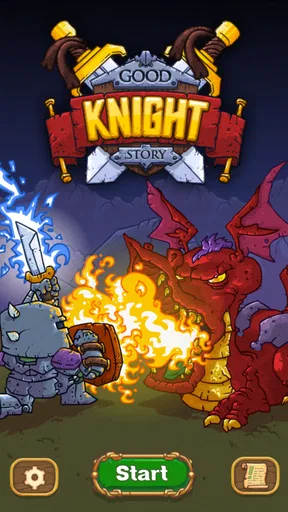
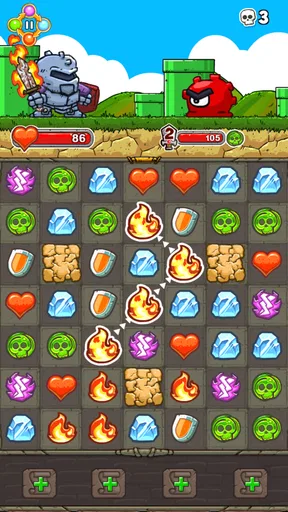
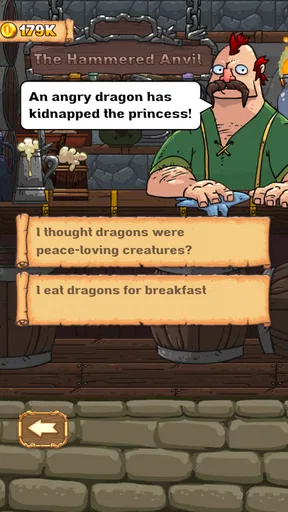
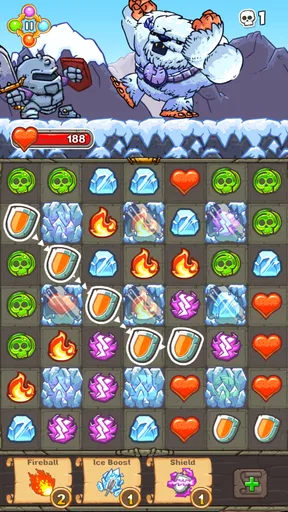
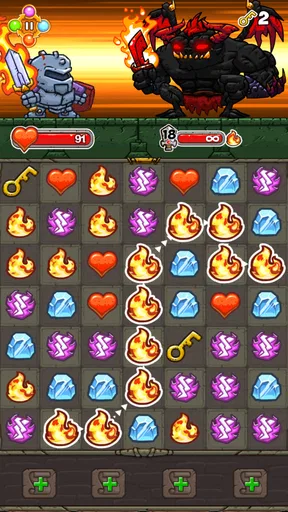
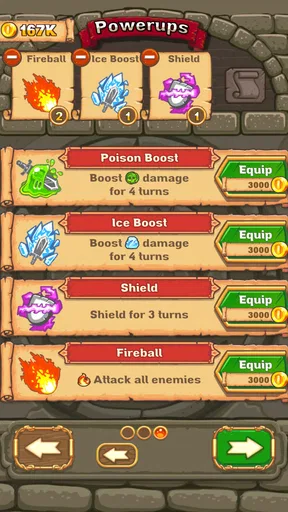
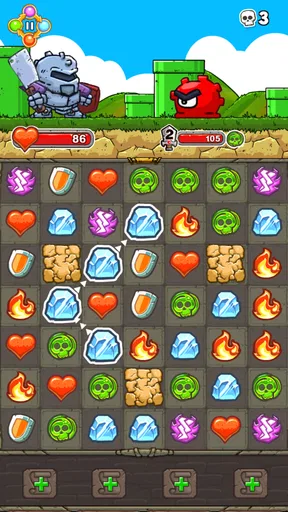
Our Review of Good Knight Story
 Analysis by Appyee
I first noticed Good Knight Story because it looked like the sort of board puzzle game that could work well on a shared phone: quick to understand, easy to pass between people, and light enough for an occasional session. After spending time with it, I found a compact match-and-battle experience built around an unlikely hero, puzzle solving, and monster fights. It is free to play, developed by Turbo Chilli, and its Teen content rating is worth keeping in mind before handing the device to a younger player.
The basic appeal is immediate. You make matches on a board, use the results to overcome enemies, and move through a humorous fantasy adventure rather than simply chasing an endless score. That combination gives each turn more purpose than a standard matching game. I am not just clearing pieces because the board tells me to; I am trying to make the next move help the knight survive, attack, or prepare for what comes next.
At the same time, this is not a deep tabletop strategy game in the traditional sense. The board is the main interaction, and the adventure layer gives it context. Players who want a richly customizable role-playing game may find it limited, while anyone looking for a casual puzzle they can pick up without a long tutorial will probably understand the attraction quickly.
How it works when one device serves several people
In a household, the most natural way to use this game is as a pass-and-play distraction rather than a formal multiplayer activity. One person can finish a few encounters, hand over the phone, and let someone else try the next puzzle. That makes it suitable for a quiet wait, a short journey, or a moment when several people want to share one screen without committing to a long session.
I like this arrangement because the game gives spectators something to discuss. A second player can suggest whether to look for a larger match, save a useful move, or focus on the monster instead of making the most obvious combination. The person holding the device still makes the final decision, but the board is visible enough for another household member to participate verbally.
There is an important distinction, however: shared use does not automatically mean shared progress. I would treat one device as belonging to one active player unless everyone agrees on how to take turns. If several people advance the same adventure, it becomes easy to lose track of who made progress or why a particular choice was taken. For a family that wants clearly separated saves and personal goals, individual devices are more practical than trying to turn one copy into a profile-based family game.
That limitation is not a deal-breaker for me because the experience is naturally suited to short handovers. It does mean I would avoid presenting it to children as a communal account with guaranteed personal boundaries. The game works better as a shared activity with an agreed routine: one player handles a stage, then the next person takes the following opportunity, or everyone watches while a single player progresses.
Why the puzzle board works for casual coordination
The board creates useful conversation because the strongest move is not always the most visible one. A quick match may clear space, but a different move may produce a better attack or create a more useful setup. When I played while someone else watched, the discussion often shifted from “what can I match?” to “what should happen after this move?” That small change makes the game feel more tactical than a basic reflex puzzle.
My practical tip is to pause mentally before making the first available match. Look over the whole board, identify the enemy situation, and consider whether a move helps immediately or prepares a stronger follow-up. This is especially helpful when the game starts feeling repetitive. The added thought does not transform it into a complex strategy title, but it gives each encounter a clearer decision point.
For a shared device, I would also agree on whether advice is welcome. Some players enjoy solving the board themselves; others like having a second person point out an option. Because the game is built around individual moves rather than simultaneous control, a simple “my turn, no hints” rule can prevent minor arguments. That kind of coordination matters more than any technical setting when everyone is using the same screen.
Setup, account boundaries, and everyday use
Good Knight Story runs on Android devices using version 7.0 or later, which makes it accessible to people who do not have a newer phone. The current version is 1.0.12. I would still check the device before planning a household game session, especially if the shared phone is older or has limited storage, but the operating-system requirement itself is not unusually demanding by modern standards.
Because the game is free to download, it is easy to try without making an immediate purchase decision. That is useful when several household members are unsure whether they will enjoy the mix of board puzzles and fantasy combat. The important boundary is that free installation should not be confused with a completely purchase-free experience. In-app items range from $0.99 to $29.99 per item, so I would establish the household rule before letting another person play.
On a shared phone, I would keep the payment decision with the device owner. A child or guest can play the available content, but any purchase should require the owner’s direct approval. This is not a criticism unique to this game; it is simply the sensible way to manage a free-to-start title with optional paid items. The game’s price makes experimentation convenient, while the purchase range makes casual, unsupervised tapping a poor idea.
I also recommend agreeing on whether progress can be reset, interrupted, or continued by somebody else. Puzzle decisions are small, but they can still feel personal when a player is trying to solve a stage in a particular way. If the phone is used by several people, a spoken boundary such as “finish the current encounter before passing it on” keeps the experience pleasant. Without that agreement, one person may accidentally spend the next move or alter the intended approach.
The game does not need to become a household project. In fact, too much administration would undermine its strongest quality: immediacy. A short conversation about purchases, turns, and whose progress is being played is enough. Once those boundaries are clear, the title is easy to include in a shared-device routine.
What to expect from the free model
I would approach the payment system with the same caution I use for any free puzzle game. The initial download lowers the barrier to entry, but optional items can change how comfortable the experience feels over time. Someone who wants a completely fixed, one-time purchase may prefer a paid puzzle game with no item shop. Someone who is happy to sample the adventure and decide later may appreciate being able to begin without paying.
For households, the real trade-off is not just cost. It is also attention. A player may become more interested in an item or a faster way through a difficult moment, while another person using the device may not understand what a purchase means. I would keep the decision-making adult-led and separate from turn-taking. That preserves the casual nature of the game without making every session a negotiation about spending.
Age context, trust, and who should play
The Teen rating should be taken seriously when the audience includes children. The fantasy setting, battles, and monster encounters are central to the game’s identity, so I would not assume that a cartoon presentation makes it suitable for every age. Parents and guardians should make the decision based on the individual child’s comfort with those themes rather than treating it as a neutral puzzle app.
For teenagers and adults, the tone is easier to place. The adventure framing gives the matches a reason to exist, and the comic premise keeps the game from feeling like a grim combat title. I found that balance helpful during short sessions because the game has enough personality to make another stage feel worthwhile, yet it does not demand the same emotional investment as a large role-playing adventure.
Trust also matters around sharing. A child playing on a parent’s phone may be fine with the puzzle content but still need clear permission before interacting with optional items. An older sibling may understand the game but accidentally disturb someone else’s progress. These are household boundaries, not features I would claim the game manages for you. The safest approach is to set expectations outside the app.
For younger players who mainly want colorful matching, I would choose a title with an age context that more closely fits them. For a teenager who enjoys monsters, light fantasy, and puzzle battles, this is a more reasonable recommendation. I would also explain that the game is free to start, not necessarily free of every optional purchase, before giving them access on a shared device.
Where it fits among board and puzzle alternatives
Compared with a traditional board game on mobile, Good Knight Story offers faster solo progress and less dependence on having another person available. You can pick it up alone, solve a board, and move on without setting up a table or waiting for opponents. That makes it the better choice for a spare five minutes or an informal shared-screen session.
Compared with a pure match-three game, it has more motivation behind each move. Enemies and the knight give the board a sense of consequence, so clearing pieces is tied to an adventure rather than only a score. The compromise is that players who want endless relaxation may find the battle framing more demanding than a simple color-matching app.
It is also different from a full strategy game. I would not install it expecting extensive army management, a broad world to customize, or deep planning across many systems. Its strength is the small decision in front of you. If you want fast, understandable puzzle encounters with fantasy flavor, it fits. If you want a long-form strategic campaign with many independent choices, another category of game will serve you better.
Small decisions that make the experience better
My first useful habit was scanning before matching. The obvious move is often acceptable, but not always best. Taking a moment to inspect possible combinations helps reveal whether the board offers a better setup and makes the combat result feel more deliberate. This is particularly valuable when playing with someone else, because it turns waiting time into shared problem-solving rather than passive watching.
My second tip is to separate progress from performance. On a shared device, a player may feel pressure to make every move perfectly because another person is watching. That can make a casual game unnecessarily tense. I found it more enjoyable to treat each encounter as a small experiment: make a sensible move, notice how the board responds, and adjust on the next attempt. The adventure structure supports that learning process without requiring a long planning session.
Third, use turn boundaries that match the game’s natural rhythm. Passing the phone after every move is too disruptive, while letting one person continue indefinitely defeats the purpose of sharing. Passing after an encounter or another clear stopping point keeps the flow intact. It also makes it easier to remember where each person’s contribution begins and ends.
Finally, keep purchase approval outside the excitement of a difficult stage. A close battle can make an optional item feel urgent, especially when someone is watching and encouraging a quick solution. I would stop, discuss it, and let the device owner decide later. That simple delay separates a genuine household choice from an impulse made during play.
My household verdict after living with it
Good Knight Story is a good fit for a household that wants a compact fantasy puzzle to share informally. I like its combination of board decisions, monster battles, and a lightweight adventure mood. It gives spectators something to talk about, works well in short bursts, and is approachable enough for people who do not normally play complex role-playing games.
Its weaknesses become clearer on a shared device. It is not a substitute for separate player profiles, a dedicated family board-game mode, or a carefully managed child account. Progress can become socially confusing when several people use the same copy, and the optional purchase range means the owner should keep spending decisions firmly under control. The Teen rating also makes it unsuitable as an automatic choice for young children.
The game has attracted a substantial audience, with an average rating of 4.5 from around 273 thousand ratings and more than 1 million installs. Those figures suggest that its straightforward puzzle-and-battle formula connects with many players, though popularity alone does not remove the need to consider age, spending, and shared-progress expectations.
For me, the best use case is a teenager or adult playing on a personal device, or a household passing one phone around for short, agreed sessions. I would recommend it to anyone who likes matching puzzles but wants a little more purpose than chasing points. I would skip it in favor of a traditional paid puzzle game if predictable pricing is essential, and I would choose a more clearly child-oriented title when the main player is below the Teen audience.
Overall, Turbo Chilli has made a game that is easy to start and more thoughtful than its simple board interaction first suggests. Treat it as a casual adventure puzzle, set clear household boundaries, and it can become a pleasant shared-device option. Treat it as a fully separated family game with automatic control over progress and purchases, and it will not meet those expectations.
Verdict
Strengths of Good Knight Story
- Quick, casual levels are ideal for short gaming sessions.
- Simple controls make the game accessible to new puzzle players.
- The knight theme gives the matching gameplay a light adventure feel.
- Progression provides a clear sense of achievement after completing stages.
- Works well for players who enjoy relaxed, non-competitive puzzle games.
Limitations of Good Knight Story
- Some levels may feel repetitive after extended play.
- Difficulty can become uneven as later stages introduce tougher challenges.
- Limited variety may reduce long-term appeal for experienced puzzle fans.
- In-app purchases may affect players who want faster progress.
- The game may require patience when luck influences available matches.
Similar Picks in This Category
View All
Ludo King®
Gametion4.1

Ludo
Yarsa Games4.6

Tile Master® - Matching Game
Higgs Studio3.6

Checkers Online
CC Games4.6

Dominoes
Loop Games4.7

Chess
Chess Prince4.6
Frequently Asked Questions
What is Good Knight Story?
Good Knight Story is a casual match-three puzzle game with a humorous medieval setting. You play as a knight moving through story-based levels by matching three or more identical items. Each stage includes different objectives, obstacles, and enemy encounters, so success depends on planning combinations rather than simply making quick matches. Its short levels make it suitable for brief gaming sessions.
How do you play Good Knight Story?
The basic gameplay involves swapping adjacent objects to create matches of three or more identical symbols. Larger combinations can produce special items with stronger effects, helping clear multiple tiles or damage enemies. Before making a move, it is useful to check the level objective and look for chain reactions. Some stages may require defeating opponents, collecting items, or completing the board within a limited number of moves.
Is Good Knight Story free to download and play?
Good Knight Story can generally be downloaded and played without an upfront purchase, but availability and monetization may vary depending on the platform or region. Like many free mobile puzzle games, it may include optional in-app purchases, advertisements, or systems that help players progress more quickly. It is recommended to review the store listing before downloading, especially if the device is used by children.
Does Good Knight Story require an internet connection?
Many of the core puzzle levels in Good Knight Story are designed for convenient mobile play and may work without a continuous internet connection. However, certain features can depend on connectivity, including advertisements, purchases, updates, synchronization, or promotional content. Offline behavior may also differ between Android and iOS versions, so testing the game after installation is the best way to confirm which functions remain available without Wi-Fi or mobile data.
Is Good Knight Story suitable for children and casual players?
Good Knight Story is generally approachable for casual players because its controls are simple and the match-three mechanics are easy to understand. The colorful presentation and comic medieval theme make it accessible, while later levels add more challenging objectives for experienced puzzle fans. Parents should still check the current age rating and in-app purchase settings, since advertising, optional purchases, or mild cartoon-style combat may be included.
Play our best games!


